
Granite Countertops Jacksonville FL
Outdoor Granite Countertops Jacksonville FL
Outdoor living is a genuine part of how Jacksonville homes are used, and the lanai kitchen is often as important as the indoor one. Granite is a common choice outdoors, but Florida sun, humidity, wind-driven rain and grill heat all deserve specific attention during planning.
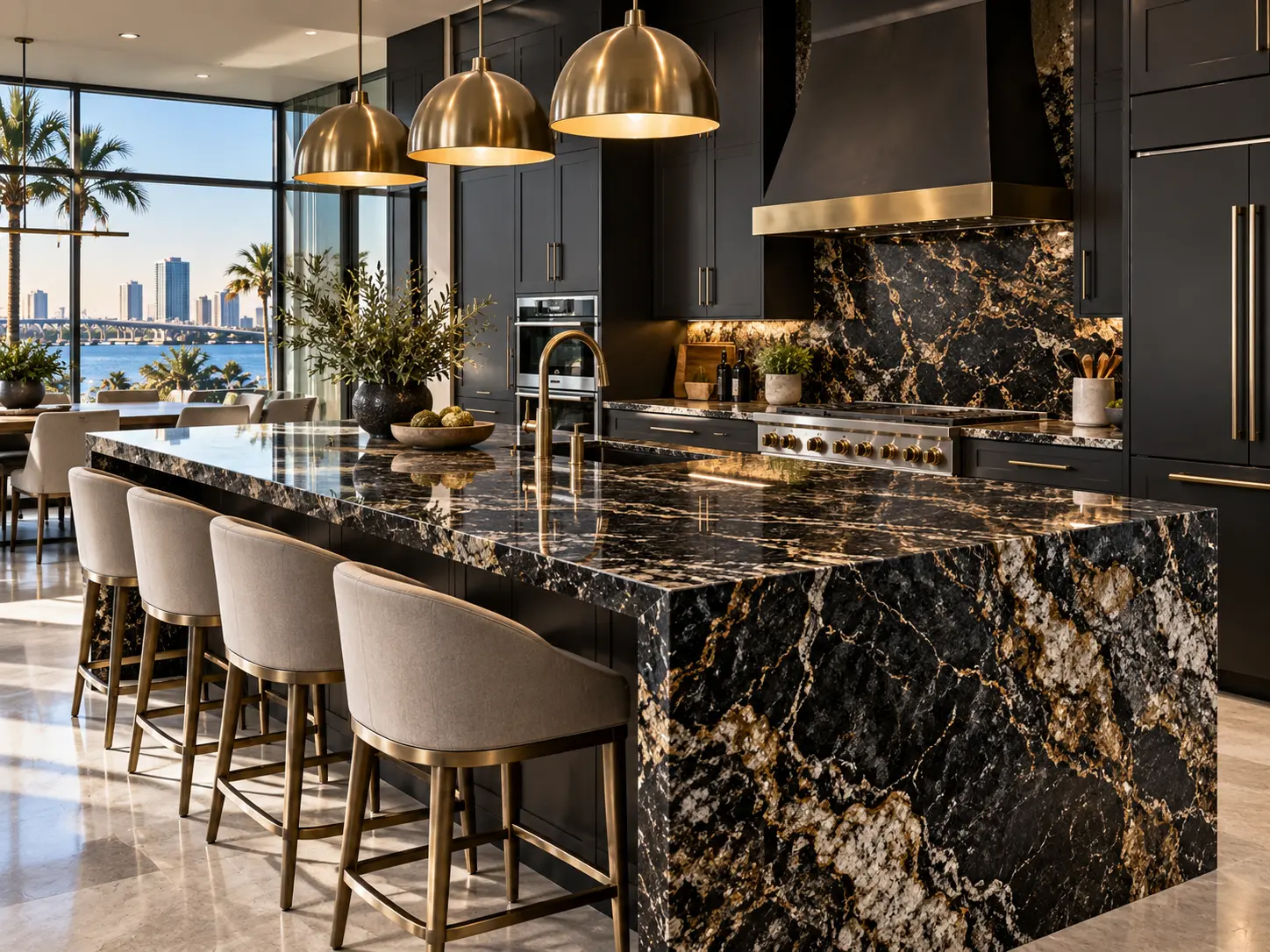
Why Granite Is Often Considered for Outdoor Kitchens
Granite's color comes from the minerals in the stone itself rather than from added pigment, which is one reason natural stone is frequently used in exterior applications. Some engineered surfaces carry manufacturer restrictions on outdoor or direct-UV installation, and those restrictions vary by product and brand. This is a real difference worth understanding, but it should not be read as a blanket claim that every granite is ideal outdoors or that every engineered product fails outdoors — always check the specific stone and the specific manufacturer's documentation.
Covered vs Uncovered Installations
A covered lanai is a much easier environment than a fully exposed patio. Cover reduces direct UV load, limits standing water, keeps pollen and debris off the surface and makes the space usable through Florida summer afternoons and sudden storms. Uncovered installations are possible, but expect more frequent cleaning, more attention to sealing, and more thermal movement between a hot afternoon surface and a cool evening rain.
- Drainage matters: standing water in a low spot invites staining and mineral deposits.
- Wind-driven rain reaches further under a lanai roof than most people expect.
- Salt air near the beaches adds another cleaning consideration.
- Pollen season leaves a film that is easier to remove from a sealed, polished surface.
Heat, Grills and Clearances
Granite is heat resistant, which is one reason it is common around grills. It is not heat proof. Built-in grills, side burners and pizza ovens have manufacturer-specified clearances to combustible and non-combustible surfaces, and those specifications govern the cutout and the surrounding stone. Insulated jackets are required by some grill manufacturers for certain enclosure types.
Direct sun is its own heat source. A dark, deeply colored granite in a west-facing uncovered patio can become genuinely hot to the touch on a summer afternoon. If children will lean on the counter or if you plan to place hands and forearms on the surface regularly, a lighter stone or a shaded location is worth considering.
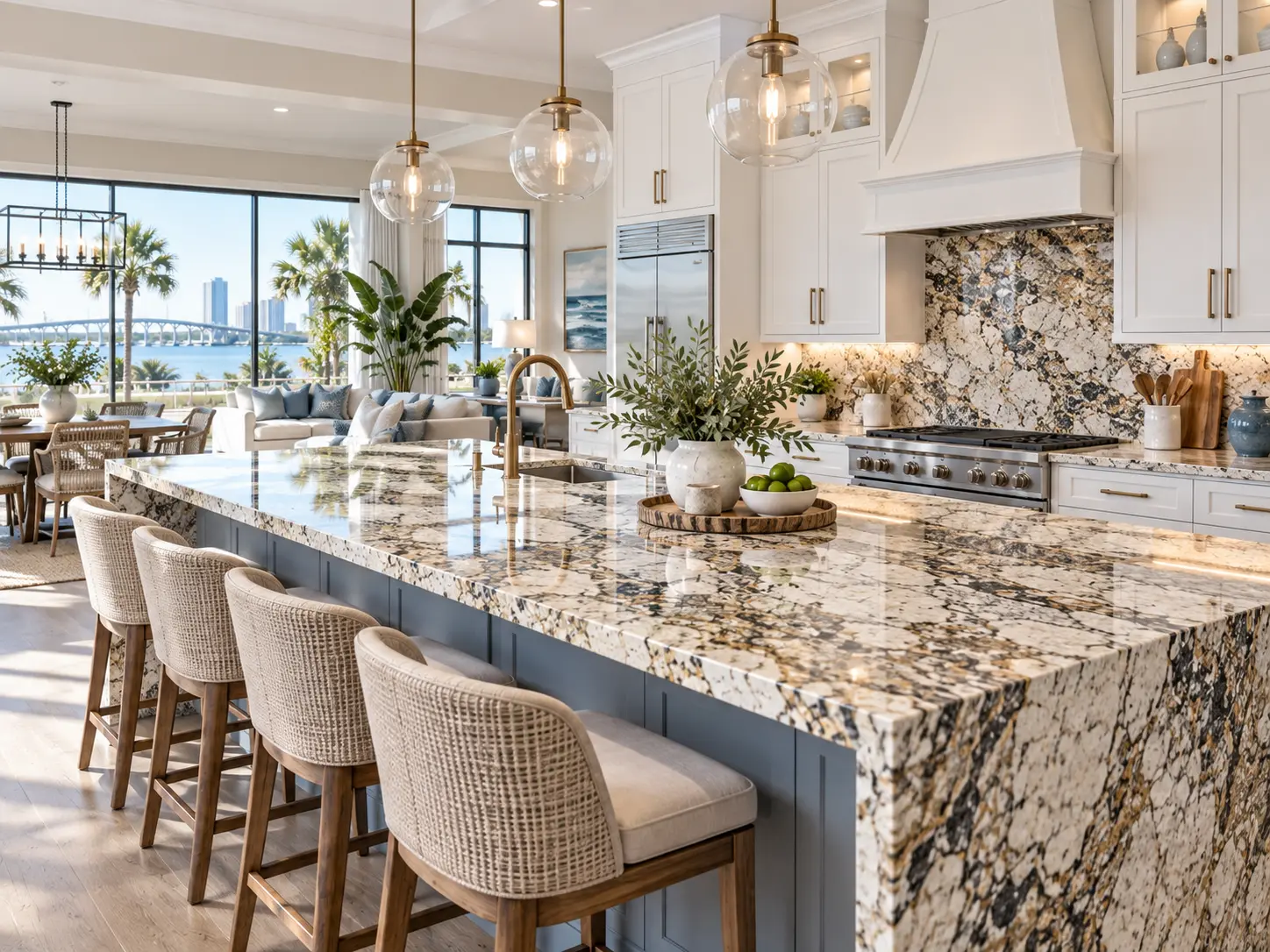
Layout for Outdoor Kitchens
- Grill surround: prep landing space on both sides of the grill makes the space far more usable.
- Bar counters: a raised bar or a seating overhang needs support just as it does indoors.
- Outdoor sinks: plumbing must be freeze-tolerant enough for occasional Northeast Florida cold snaps and needs proper drainage.
- Under-counter appliances: refrigerators and ice makers have ventilation requirements that affect cabinet framing, not just the stone.
- Enclosure framing: masonry, metal stud or manufactured cabinet systems each support stone differently, so the substructure should be confirmed before templating.
Sealing and Cleaning Outdoors
Outdoor granite generally needs sealer attention more often than the same stone indoors because it faces UV, rain, pollen and temperature swings. How often depends on the specific stone's porosity, the sealer used and the exposure. A simple water test — leaving a small puddle for several minutes and watching whether the stone darkens — gives a rough indication that resealing may be due.
- Rinse regularly and wipe with a pH-neutral stone cleaner rather than acidic or abrasive products.
- Clean grease and marinade spills promptly; oil is the most common staining source in an outdoor kitchen.
- Cover the counter or use a grill cover during long periods of disuse.
- Avoid dragging heavy planters or cast iron across the surface.
Related care guides
Outdoor Granite Questions
Can granite be used in an outdoor kitchen in Florida?
Granite is commonly used outdoors in Northeast Florida, particularly under covered lanais. Suitability still depends on the specific stone, the exposure, drainage and how the enclosure is built, so evaluate the slab and the location together.
Will Florida sun fade outdoor granite?
Granite color comes from its minerals rather than surface pigment, so significant UV fading is not typical. Sealers and surface finishes can degrade over time in strong sun, which is why outdoor stone usually needs more sealing attention.
Does dark granite get hot outside?
Yes. Any dark surface in direct Florida sun can become hot to the touch. Shade, a lighter stone or a covered location all help.
How often should outdoor granite be sealed?
More often than the same stone indoors, but there is no universal interval. Test with water periodically and follow the sealer manufacturer's guidance for your stone.
Can I put a hot grill grate directly on the granite?
Granite tolerates heat well, but sudden extreme localized heat is still a risk, especially where resins or sealers are present. Use a trivet or a heat-safe landing surface.
Speak with us
Planning an outdoor kitchen counter?
Talk through your kitchen, bathroom or outdoor project and get a clear estimate.
Call now for service availability. Please have your 5-digit ZIP code ready.